Here we use the readdir approach to the fs class, that will get a path and a callback perform as parameters. It will learn the content material of the listing into reminiscence and when accomplished it can execute the callback with 2 parameters. The first one is the error object in case there was an error. The second one is a callback which might be referred to as when the the operation has finished. If there was an error then the primary parameter will maintain that information.

If each little factor went well, then the second parameter can be an array with all of the gadgets (files, directories, symbolic links, etc.) that have been present within the directory. Callingfs.mkdir() when path is a listing that exists ends in an error solely when recursive is false. CallingfsPromises.mkdir() when path is a listing that exists ends in a rejection solely when recursive is false.

By default, dest is overwritten if it already exists. No arguments aside from a plausible exception are given to the callback function. Node.js makes no ensures concerning the atomicity of the copy operation.
If an error happens after the vacation spot file has been opened for writing, Node.js will try and dispose of the destination. Today, node js create listing if not exists is our major topic. You'll discover ways to create listing in node js. This article goes in detailed on the right way to create a brand new listing in node js. This instance will make it easier to node js create folder if not exists. The preferable answer could be to make use of the npm module referred to as node-fs-extra.

It has a way referred to as mkdir which creates the listing you mentioned. If you give an extended listing path, it'll create the dad or mum folders automatically. The module is a superset of npm module fs, so that you should use all of the capabilities in fs additionally when you add this module. There are two choices to learn the contents of a directory. By default, the readdir operate returns an inventory of the names of all of the data and folders instantly under the requested directory.

Note that, as opposed to copying your whole working directory, we're solely copying the package.json file. This enables us to benefit from cached Docker layers. Once we've our information contained in the image, we will use the RUN command to execute the command npm install. The ultimate argument, callback, is a callback perform that's invoked with a conceivable error argument.

If any of the accessibility checks fail, the error argument will probably be an Error object. The following examples assess ifpackage.json exists, and whether it's readable or writable. The inbuilt fs module in Node.js helps us to manage file and folders associated operations.

In the prior tutorial we noticed methods to create records and edit it utilizing fs module. Here, we'll find out how we will create new folders or directory. The promise API permits you to benefit from JavaScript's async/await syntactic sugar to write down asynchronous code in a synchronous way.
The readFile() operate referred to as on line four above returns a promise. The code that follows seems to be executed synchronously. Finally, the promise is returned from the function. The await operator is optional, however since we've included it, the operate will await the file operation to finish earlier than returning. In addition to defining and fetching dependencies you will even outline named scripts in your package.json data and identify NPM to execute them with the run-script command.

Every process within the fs module has synchronous in addition to asynchronous forms. Asynchronous strategies take the final parameter because the completion operate callback and the primary parameter of the callback operate as error. It is best to make use of an asynchronous process in preference to a synchronous method, because the previous certainly not blocks a program for the duration of its execution, whereas the second does. Change the file system timestamps of the symbolic hyperlink referenced by path.
Returns undefined, or throws an exception when parameters are incorrect or the operation fails. This is the synchronous edition of fs.lutimes(). Asynchronously rename file at oldPath to the pathname offered as newPath. In the case that newPath already exists, it is going to be overwritten.

If there's a listing at newPath, an error might be raised instead. No arguments aside from a feasible exception are given to the completion callback. It's time to close() the aid deal with for this article. We have taken a radical seriously look into the way to work with files, links, and directories utilizing the Node.js fs module. File processing is supplied in Node.js out of the box, totally featured and in a position to use. Examples three and four reveal the way to make use of the writeFile perform to put in writing to present or new files.

The writeFile operate can even create a file if it doesn't exist earlier than writing to it. However, if the file already exists and includes data, the contents of the file is overwritten with out warning. The callback will get two arguments the place recordsdata is an array of the names of the recordsdata within the listing excluding '.' and '..'. The style argument would be set to 'dir', 'file', or 'junction' (default is 'file') and is simply obtainable on Windows .

Note that Windows junction factors require the vacation spot path to be absolute. When employing 'junction', the vacation spot argument will routinely be normalized to absolute path. Returns undefined, or if recursive istrue, the primary listing path created. Synchronously exams a user's permissions for the file or listing specified by path. The mode argument is an elective integer that specifies the accessibility checks to be performed. Check File entry constants for potential values of mode.

The fs.readFile() way asynchronously reads the contents of a file into reminiscence one chunk at a time, permitting the occasion loop to show between every chunk. Request that every one information for the open file descriptor is flushed to the storage device. The targeted implementation is working system and gadget specific. Refer to the POSIX fsync documentation for extra detail. Using fs.exists() to envision for the existence of a file earlier than callingfs.open(), fs.readFile() or fs.writeFile() is just not recommended.

Doing so introduces a race condition, since different processes might change the file's state between the 2 calls. Instead, consumer code need to open/read/write the file immediately and deal with the error raised if the file doesn't exist. Tests a user's permissions for the file or listing specified by path.

The callback type takes a completion callback operate as its final argument and invokes the operation asynchronously. The arguments handed to the completion callback rely upon the method, however the primary argument is usually reserved for an exception. If the operation is accomplished successfully, then the primary argument is null or undefined. When the recursive parameter is true, the mkdir() system does not throw any error even when the trail already exists. So it really is dependable to make use of it even when you're making a single directory. Most CLI purposes settle for a number of command line arguments, resembling optional/required parameters, commands, flags/switches, or different configuration values.

Although you will parse command line parameters by inspecting the Node.js process.argv value, there are modules attainable which will prevent numerous of time and effort. The yargs module is one such module for Node.js designed to help essentially the most typical CLI scenarios. The readdir operate doesn't give a recursive choice to examine the contents of sub-directories. You'll must put in writing your personal recursive operate or depend on a third-party module like recursive-readdir](). If you're working with files, it's inevitable that you'll want to work with directories too.
The fs module gives a wide range of capabilities for creating, modifying, and deleting directories. This is a non-blocking strategy that will likely be extra acceptable for Node.js applications, however it surely comes with its very own challenges. Using callbacks in asynchronous programming in many instances leads to callback hell. If you're not cautious with the way you shape your code, you could find yourself with a posh stack of nested callback capabilities that might be hard to learn and maintain. To use a file within the construct context, the Dockerfile refers to come returned to the file laid out in an instruction, for example, a COPY instruction. To boost the build's performance, exclude recordsdata and directories by including a .dockerignore file to the context directory.

To increase the context load time create a .dockerignore file and add node_modules listing in it. Usually the very very first factor you do as soon as you've downloaded a challenge written in Node.js is to put in npm packages. This ensures that your software has all its dependencies mounted into the node_modules listing the place the Node runtime will probably be capable of finding them. To allow docker BuildKit by default, set daemon configuration in /etc/docker/daemon.json function to true and restart the daemon. If the daemon.json file doesn't exist, create new file referred to as daemon.json after which add the next to the file. You can manually use NPM to individually fetch every considered necessary package.

Typically we as a substitute handle dependencies applying a plain-text definition file named package.json. The package.json file must comprise each little factor NPM must fetch and run your software . The code imports the "http" module and makes use of it to create a server (createServer()) that listens for HTTP requests on port 3000. The script then prints a message to the console about what browser URL you must use to check the server. An vital a half of working with temp folders is cleansing them up when they're not needed. To do that properly, you could wrap your logic in a try..catch..finally statement.

If an error occurs, one can manage it within the catch segment. You additionally must retain in mind, that deleting the temp listing can fail. If that happens, you must print the whole path to the temp directory, in order that customers can get rid of it themselves. You start off by retrieving the situation of the system temp folder employing the os.tmpdir() function.

You mix it with a prefix for our app applying path.join(). This is optional, however it makes it less demanding to find our app's temp listing if needed. After you created the folder, you possibly can begin working with it. The callback-based fs.open(), and synchronous fs.openSync() strategies open a file and allocate a brand new file descriptor. Once allocated, the file descriptor can be used to examine facts from, write facts to, or request details concerning the file. Objects returned from fs.stat(), fs.lstat() and fs.fstat() and their synchronous counterparts are of this type.
A file descriptor may even be handed because the primary argument. Do not use fs.access() to envision for the accessibility of a file earlier than callingfs.open(), fs.readFile() or fs.writeFile(). Instead, consumer code ought to open/read/write the file immediately and deal with the error raised if the file isn't accessible. The callback APIs carry out all operations asynchronously, with out blocking the occasion loop, then invoke a callback operate upon completion or error. Using fsPromises.access() to envision for the accessibility of a file earlier than calling fsPromises.open() isn't recommended.
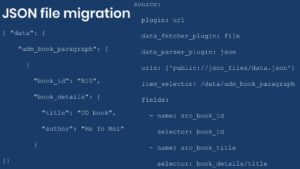
Node Js Create Or Check Directory In a Node.js application, you should use the mkdir() way offered by the fs core module to create a brand new directory. This way works asynchronously to create a brand new listing on the given location. That code will create a brand new listing at a path of "/files/a/new-directory-name" regardless of whether or not the "/files" or "files/a" directories exist already. If they do not exist, fs.mkdir() will create them together with the "/new-directory-name" directory.

To assist the PKCE authentication flow, your CLI software wants a couple of extra libraries. In this tutorial, you may use hapi to create an internet server to manage the authentication callback. Dotenv is used to examine configuration settings from the .env file.

You will use open to launch the default browser for login. And, uuid is used to assist generate a singular exclusive key to change with the authentication server. The fs module gives you quite a lot of capabilities you need to use to work with onerous and soft, or symbolic, links.
Many of the file capabilities we've already seen have equal variants for working with links. The watch perform may even be used to observe the contents of a directory. It accepts an elective recursive possibility that determines even if all subdirectories and records are watched.
Now that we've created our Dockerfile, let's construct our image. The docker construct command builds Docker photographs from a Dockerfile and a "context". A build's context is the set of recordsdata situated within the required PATH or URL. The Docker construct course of can entry any of the recordsdata situated within the context.

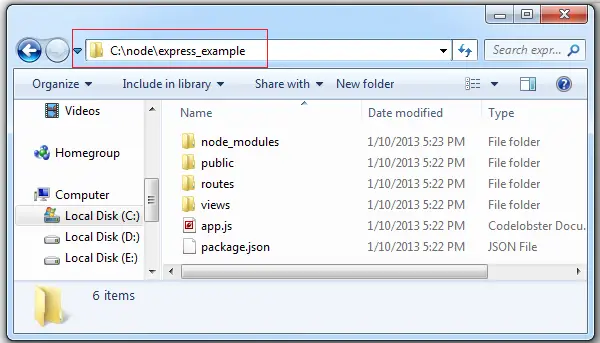
Docker photographs would be inherited from different images. You can consider this within the identical approach you'd suppose ofyou've got class inheritance in object oriented programming. For example, if we have been capable of create Docker photographs in JavaScript, we'd write some factor just like the following. Files & Directories, we have discovered how we will use the fs module to create, update, remove, transfer and so on data & directories. Here is a choice of operations it is easy to perform on files/directories that exist on the fs module. This code reveals a minimal "HelloWorld" Express net application.